
About Izawaya
Our Concept
Kyoto tradition,
worn every day.
Since our founding in 1865 (Keiō 1), Izawaya has handled kimono accessories in the same place in front of the Minami-za in Shijo, Kyoto. Obi, obijime, obiage, kimono bags, small accessories: none of what we sell plays the lead in an outfit. They are the small things that set off the kimono and obi and decide the final impression.
Over these 160 years, the occasions on which people wear kimono have changed greatly. What was once part of daily life has become something for special days. That we have been able to keep the shop going is, we believe, because we have never simply “protected tradition”; our work has been to “set tradition back into daily life.”
On the one day a year for celebration, and on the days you don’t wear kimono. We hope the best of what Kyoto has chosen reaches, even a little, the side of your everyday life. That is Izawaya’s wish.
In front of the Minami-za:
what it means to keep a shop here.
Cross Shijo Ohashi Bridge eastward and you will see the Minami-za on the south side (Yasaka Shrine faces it). One of Japan’s oldest theatres, it has staged kabuki on this site since the early Edo period. Izawaya sits in front of the Minami-za, at the corner just west of Yamato-oji.
It is also a place where kimono are judged by the strictest eyes: customers who dress up to see kabuki, the geiko and maiko of Gion, people from Kyoto’s kimono trade. Doing business on a street where people with a trained eye pass every day is what shaped Izawaya’s standards.
-
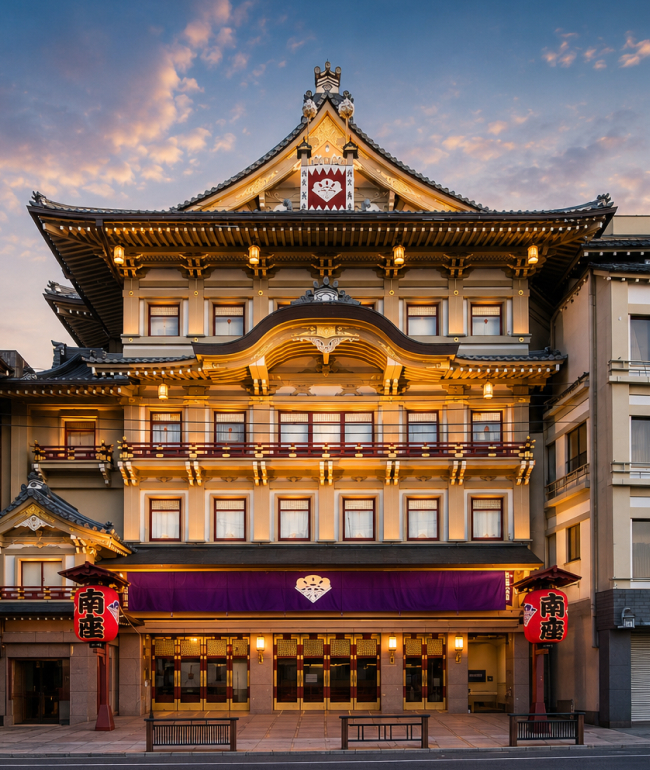
The Minami-za Theatre
In December, for the Kichirei Kaomise performances, the maneki signboards go up and the street fills with people in their finest. Izawaya’s year, too, moves with the Minami-za’s calendar.
-
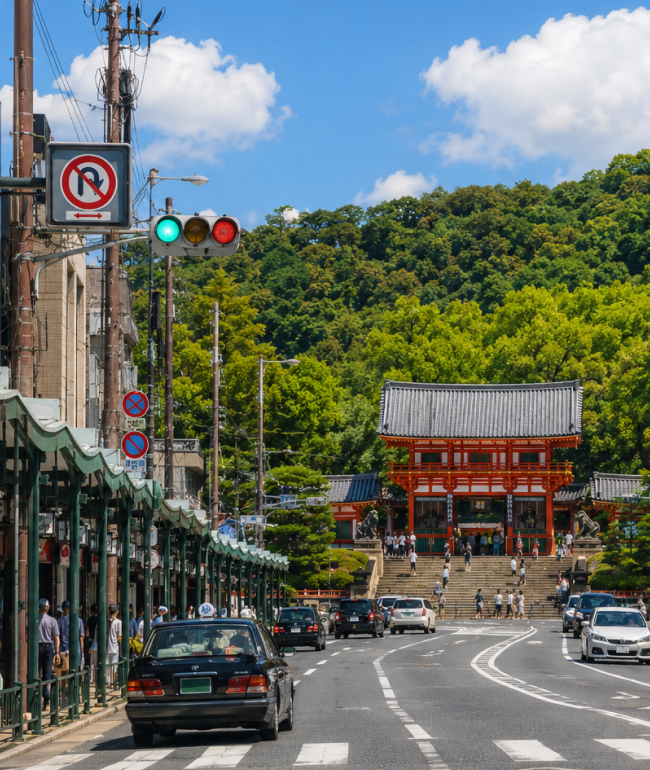
The Land of Gion
A district where the manners of the hanamachi geisha quarters are still alive. Dressing a step ahead of the season, showing restraint: Kyoto’s sense of beauty grew out of the everyday life of this land.
-
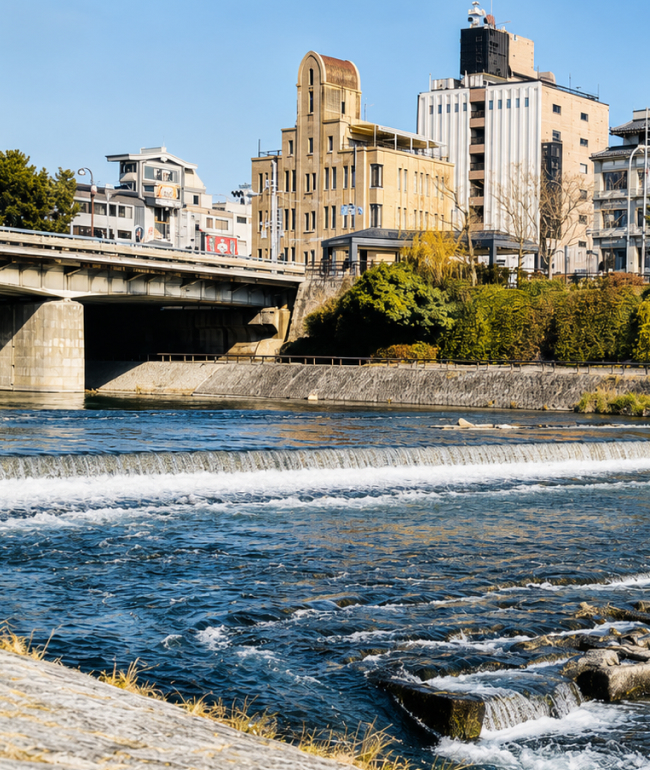
The Kamo River and Shijo Ohashi Bridge
Cross the river and the center of Kyoto and the geisha quarter part ways.
As a shop standing at that boundary, we have watched the town change for 160 years.


History
Founding
Keiō 1 (1865)
The first proprietor, Seibei, hangs a noren in Gion, Kyoto, in the lively final years of the shogunate.
Izawaya of Kyoto
Meiji period
“If you want a komono shop, it’s Izawaya of Kyoto,” they said, and the shop became famous across Japan.
It walked alongside Gion, Kyoto women and kimono culture.
A Shop in the Record
Around Meiji 40 (c. 1907)
A photograph of the shop from that time survives.
It conveys the look of Izawaya on Shijo-dori to this day.
Alongside the Geisha Quarter
Early Shōwa
A storefront welcoming maiko, a show window at night, Shijo-dori with its streetcar stop:
surviving photographs reflect Gion and Izawaya of that time.
Favored by the Kabuki World
Present day
Standing in front of the Minami-za, the birthplace of kabuki, we are especially favored by members of the kabuki world.
With the craft of Kyoto artisans such as Nishijin weaving and Kyo-yūzen, we send pieces to Izawaya’s taste across Japan.
160th Anniversary
Reiwa 7 (2025)
We marked our 160th anniversary and released a commemorative film.
For the next hundred years, we will keep doing business in the same place.


Five generations in the same place.
What we changed,
and what we didn’t.
From the end of the shogunate to Reiwa. As the times changed, so did what we sell and why people dress.
What we sell, how the shop is built, why customers dress: we changed much. What we did not change is a single standard: “Is it hannari?” (refined and graceful, never pushy).
鬢様眉心日日新
A piece of calligraphy given to Izawaya by the literati painter Tomioka Tessai. It is said to express a woman’s grooming etiquette: “Each day, with a fresh heart, tidy your hair beautifully and dress (with makeup and brows) for the day.”
Dress is not only for special days. This one phrase sums up Izawaya’s way of thinking more briefly than anything else.

Our Work
-
Choose
Our first job is to check who wove, dyed and braided each piece, and to choose responsibly. Rather than lining up good things, we avoid stocking what isn’t needed.
-
Share
The meanings of patterns, the rules of the seasons, how to match formality. Dressing becomes easier when you know them. More than selling, we care that you become able to choose for yourself.
-
Continue
The craft of Kyoto’s artisans, such as Nishijin weaving and Kyo-yūzen, survives by being used.
That the shop continues means the same as the producing regions and techniques continuing.

Our Collection
Aoi bags, shinshiose obi, obijime and obiage.
What we choose, and to whom we entrust it.


Visit Us
In front of the Minami-za, Shijo.
10:30 – 20:00, no regular holidays (extended breaks twice a year, in winter and summer).
Feel free to drop in just to ask.
HOME ― About Izawaya