
Collection
Our Standard
“Izawaya-konomi”
as our standard.
At Izawaya there is a phrase we always return to when buying stock.
“Is it hannari?”
In Kyoto speech, it describes something bright and elegant yet never pushy:
that kind of refinement.
Rather than an obi that catches every eye from afar, a small piece that the person seated next to you notices. We do not compete on flash.
That is why Izawaya’s pieces can be worn with the same feeling ten years on. This is the standard we have arrived at after 160 years of choosing.


Aoi Bag
The Aoi bag is an Izawaya original. We sew it one piece at a time from cloth specially ordered from a Kyoto weaver.
Whereas many formal bags have patterns laid onto the surface, the Aoi bag’s pattern is woven into the cloth itself.
That is why its look changes with the angle of the light, and it gains luster the more you use it. The metal fittings, the color of the lining, the turn of the handle: taking care over the parts you cannot see is Izawaya’s way of tailoring.

Weave and Pattern
-
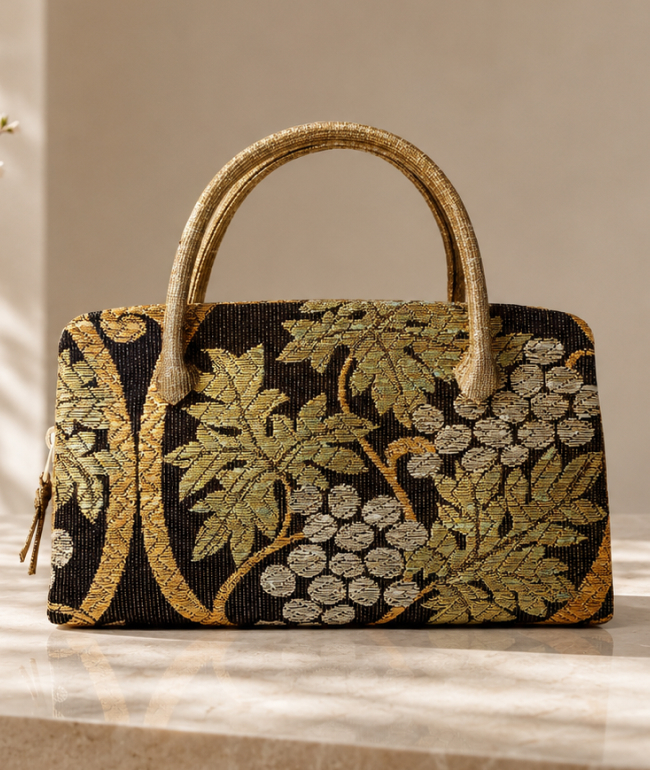
Nenkin Tsuzure-nishiki
A technique that weaves “nenkin thread”, gold leaf pasted to washi paper and twisted fine like thread, in tsuzure style. It gives off a soft light that metal thread cannot. Izawaya’s top grade.
-
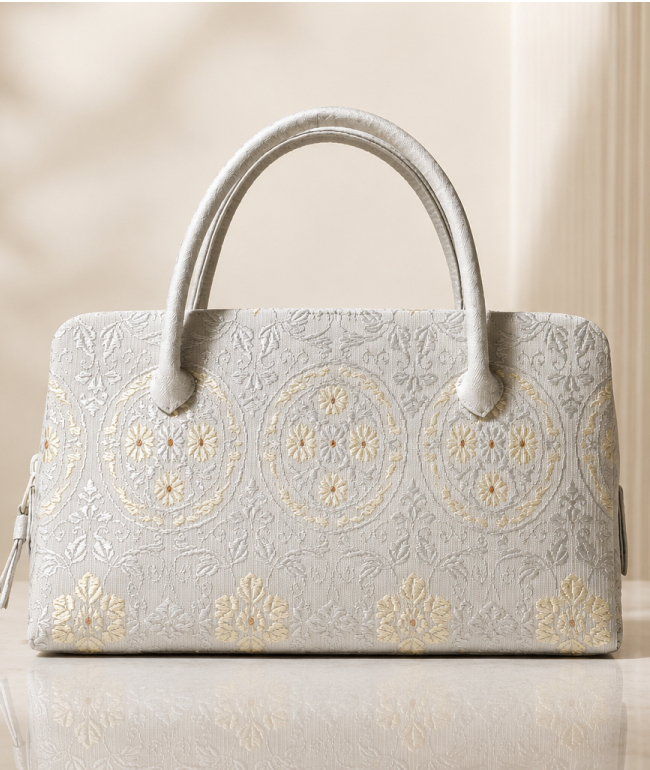
Hōryū-ji Brocade
A brocade restoring a pattern from ancient fabric preserved at Hōryū-ji.
The linked-pearl roundel motifs that crossed the Silk Road are still woven today in their Asuka-period design. -
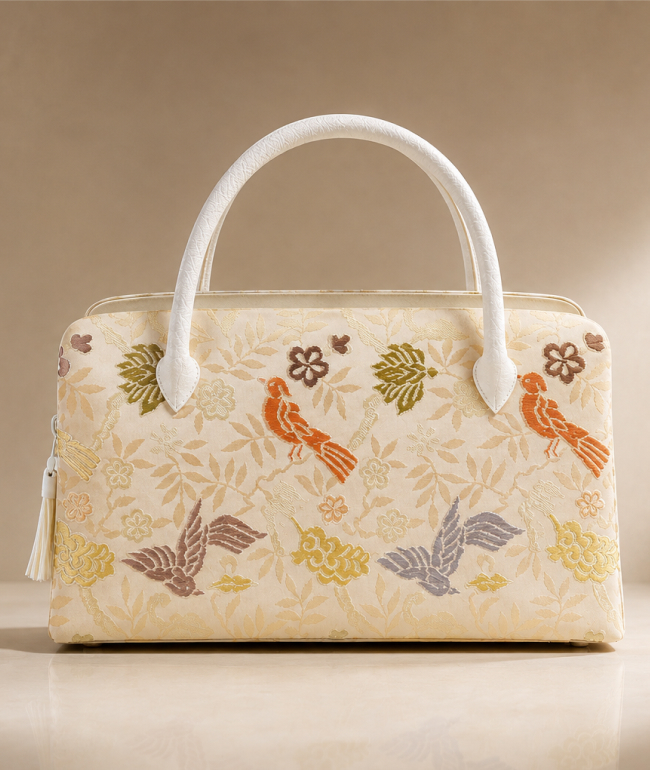
Birds, Flowers and Ichimatsu Autumn Grasses
Flowers and birds, checkerboard and autumn grasses. A pattern that gives form to the Japanese manner of wearing the seasons.
From visiting kimono to everyday tsumugi.


Shinshiose Obi
Shiose is a flat silk with no horizontal ribs, woven by driving thick weft threads through fine warp. Because the surface has no texture, drawn lines don’t bleed and dye colors come out as they are. As a nagoya obi, it suits the widest range of kimono, from komon to tsukesage.
Izawaya insists on shiose because it is a “cloth that lets the picture live.” A ro-shiose with uchiwa fans in summer, plants on a calm ground in autumn. The pleasure of changing the pattern each season becomes the reason to wear it.

Dressing a little ahead of the season: that is the Kyoto way.
Not after the cherry blossoms open,
but wearing the cherry blossom while it is still a bud.
-
SpringMar-May
Cherry, wisteria, haze —
pale ground, blossoms just beginning to open -
SummerJun-Aug
Ro-shiose, uchiwa fans, flowing water —
a sheer ground that shows coolness -
AutumnSep-Nov
Autumn grasses, chrysanthemum, maple —
a deep ground with a single sprig of harvest -
WinterDec-Feb
Pine-bamboo-plum, snow rings, nandina —
auspicious patterns to welcome the year
Obijime and obiage:
the last few inches.
The small areas decide the impression of an outfit.
Even when kimono and obi are chosen, a single obijime changes the refinement.
This is what customers consult Izawaya about most.
-
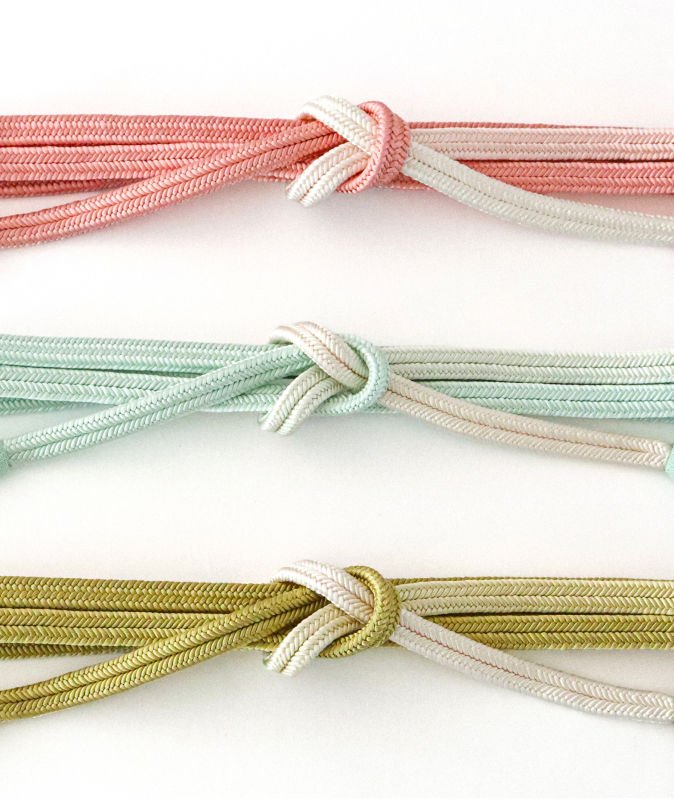
Obijime (obi cord)
Braided cord · hand-braided · lace tassels
Practical items that hold the obi in place, yet decoration at the very center of the front.
Flat, round, square: the braid changes the formality, and for summer, a sheer braid such as Kozakura lace tassels. Comfort when tied is determined by the density of the braid. -
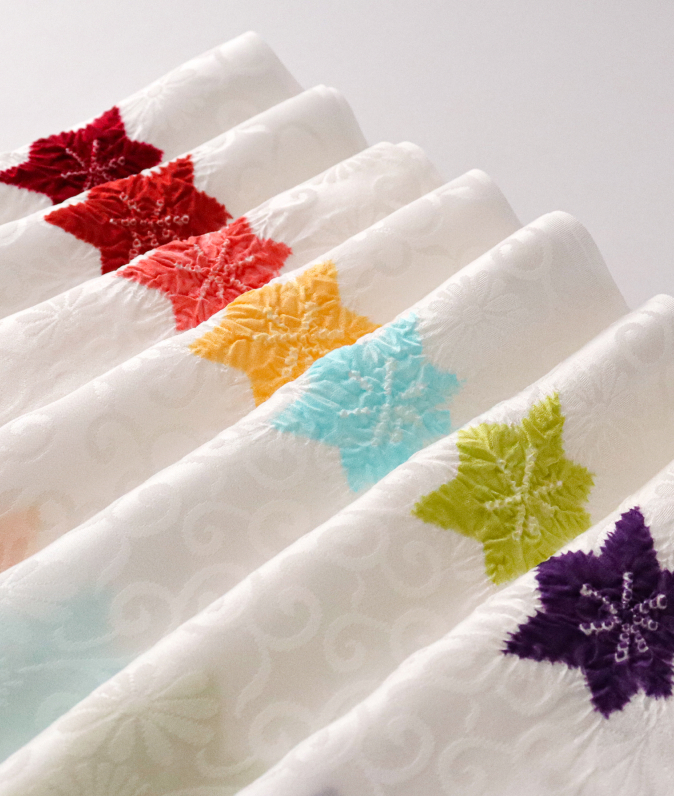
Obiage (obi sash)
Monni weave · shibori · ro
A cloth that wraps the obi pillow and shows only slightly above the top of the obi. Yet the color of this inch decides the temperature of the whole.
The shibori is knotted by hand one dot at a time, so even the same pattern is never exactly alike.


The People Who Make It
We choose, entrust, and deliver. That is why we never display anything without knowing who wove, dyed and braided it. Below are the production regions and techniques we have long worked with.
-
Nishijin Weavers
The workshop that weaves the cloth for the Aoi bag to our order. With the artisan spirit that nurtured Kyoto’s traditional crafts such as Nishijin weaving and Kyo-yūzen, they weave cloth to Izawaya’s taste.
-
Kōshū Inden
A technique, more than four hundred years old in Yamanashi, of placing patterns in lacquer on deerskin. The more you use it, the better it fits the hand and the deeper the lacquer’s gloss. As leather small goods, for both kimono and Western dress.
-
Shibori and Kumihimo Artisans
The shibori of the obiage and the hand-braiding of the obijime. In both, steps remain that are not mechanized. Days for one obijime, thousands of knots for one obiage.
Even on days you don’t wear kimono.
A kimono-accessory shop has lasted 160 years because it has changed its range with the times.
“Kyoto tradition, in everyday dress”: for a shop only for kimono days, this phrase would not hold.
-
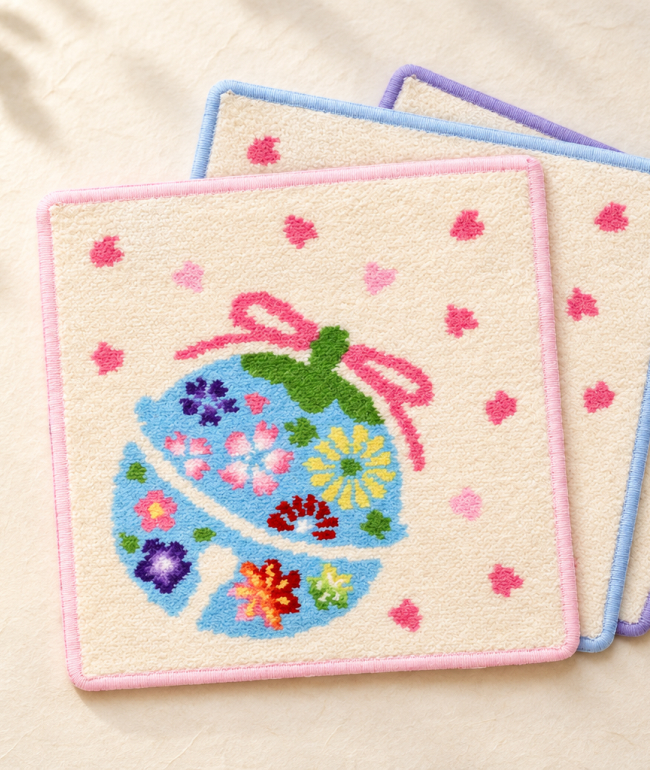
FEILER × Izawaya
Flower patterns Izawaya drew on German chenille weave. “Hana-suzu” and “Hana-mai.”
-
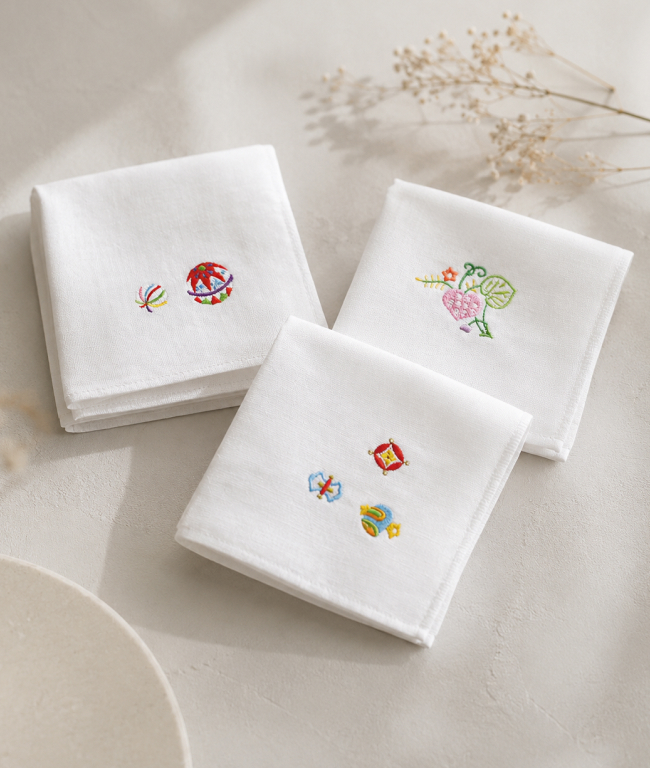
Original Gauze
Multi-layer gauze tailored as sleepwear. We hold what touches the skin to the same standard as kimono.
-
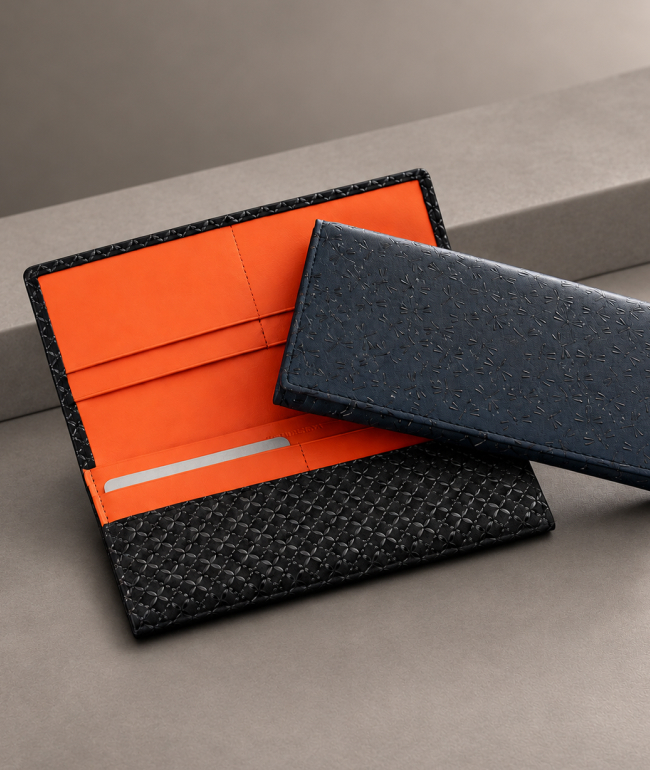
INDEN Kōshū Inden
Card cases and wallets in deerskin and lacquer. They fit even an inner suit pocket.
-
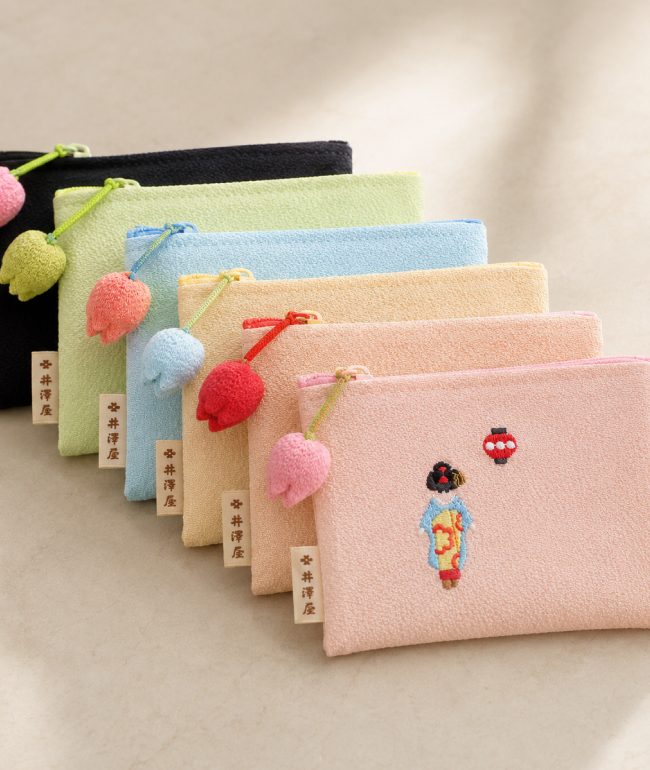
Wa-cosmetics and Chirimen Small Goods
Face-powder paper, chirimen pouches. As small gifts from Kyoto.


The quickest way is
to hold it in your hands.
The luster of the weave and the comfort of the braid can’t be fully conveyed in photos. Please come and try them on at our shop in front of the Minami-za in Shijo.
Feel free to come just for advice.

HOME ― Collection